
Shared tenants need a network that can handle busy hours
In a co-working space, the network is not just there for one office and one team. It has to support hot counters, private suites, boardrooms, reception phones, printing, and guests coming and going all day. That means fibre must be sized for mixed usage, with enough headroom for video calls, cloud apps and file sharing, even when the building is full.
Most owners start with a 50 Mbps to 200 Mbps fibre line for smaller premises, then move up when occupancy grows or when several meeting rooms are active at once. In Century City, Bellville and Stellenbosch we often see shared spaces where the internet is technically fine in the morning, then slows down when meetings start after lunch. Proper planning avoids that. If your space has thick walls, glass partitions and long passages, WiFi placement matters just as much as the line speed.
Typical equipment for a co-working fit-out
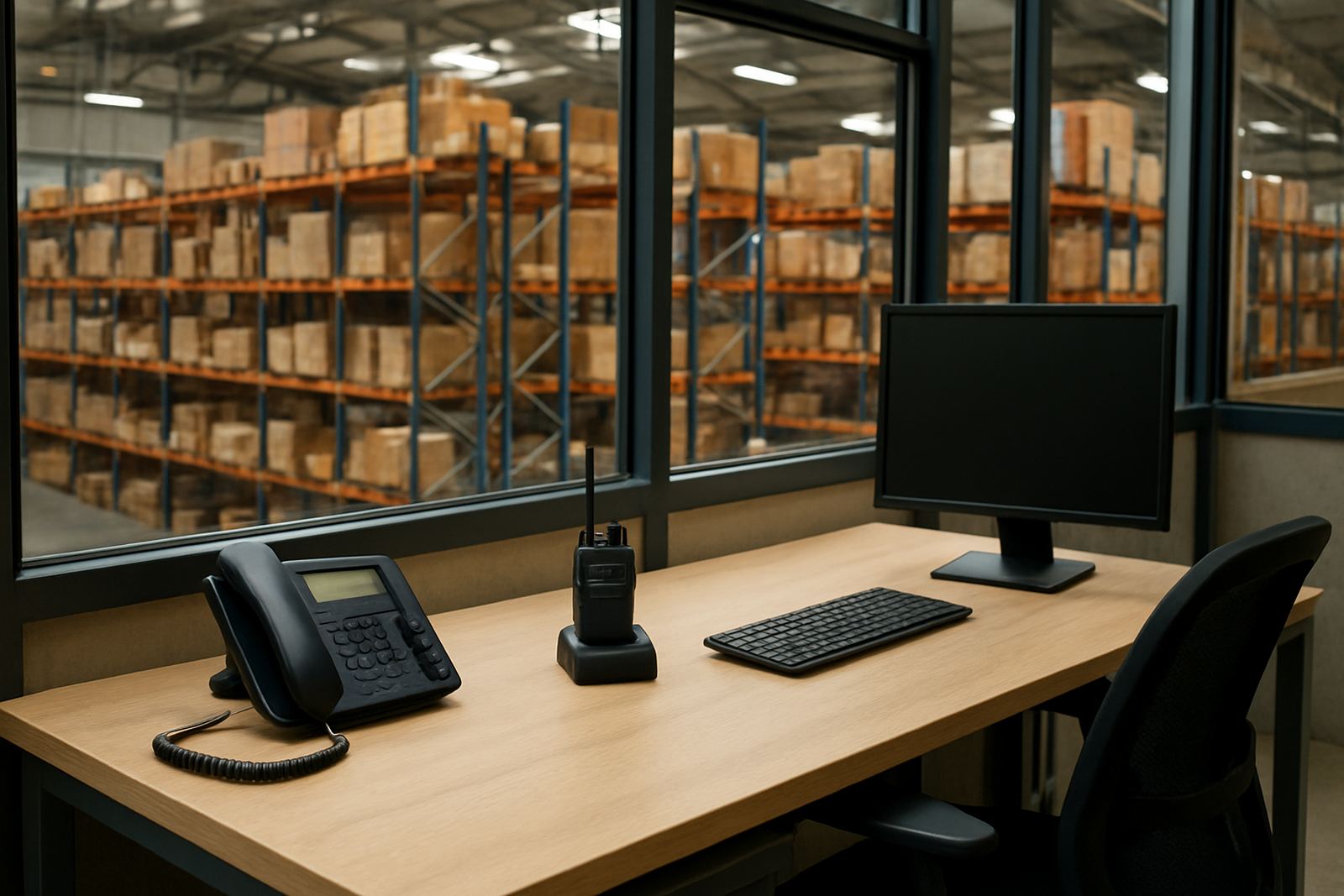
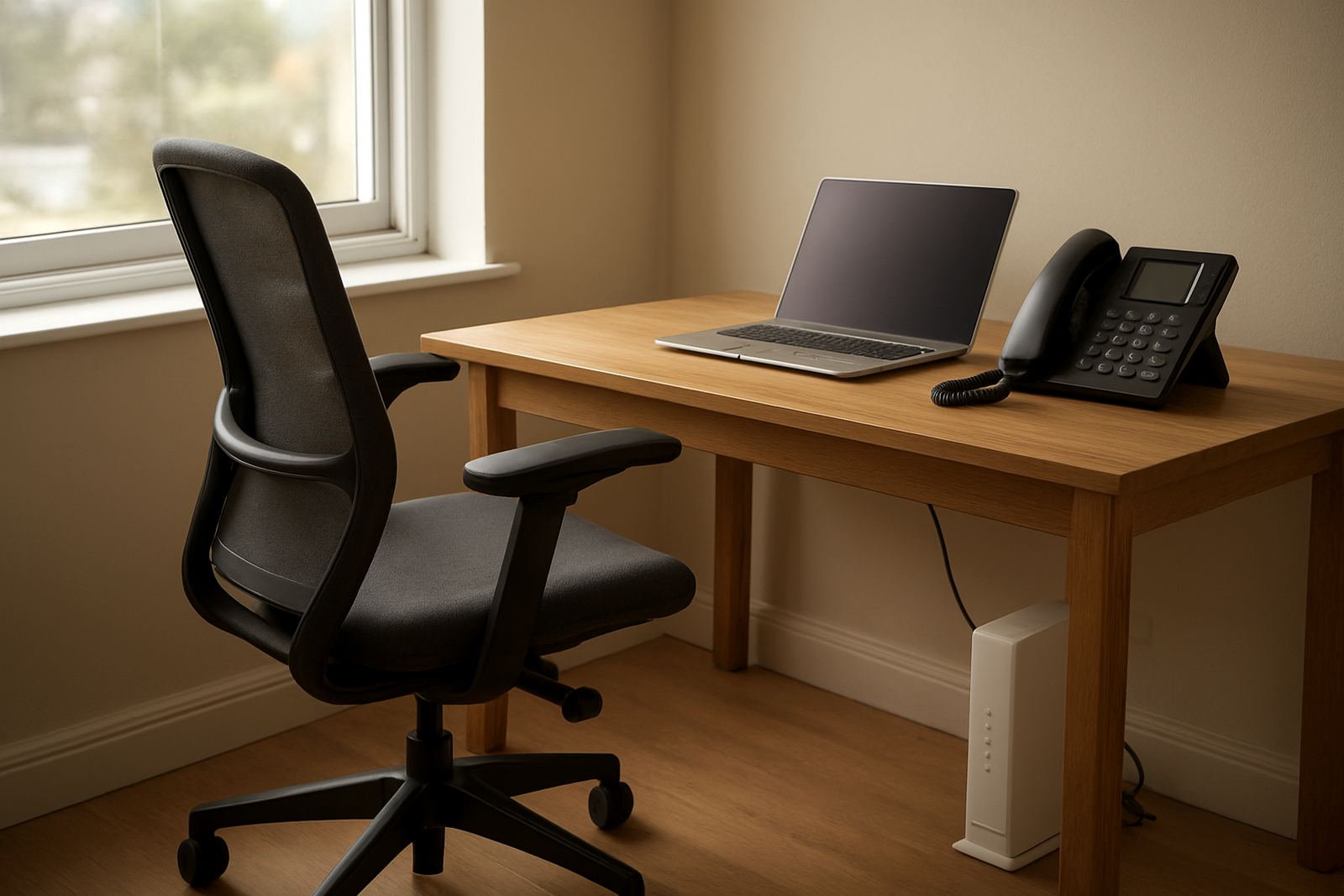
A good co-working setup should be simple for tenants to use and easy for staff to manage. The equipment usually includes a business fibre circuit, managed WiFi access points, a small network cabinet, structured cabling, VoIP handsets for reception or private suites, and a router with traffic control so one user cannot hog the full line.
For shared spaces in Cape Town, we also recommend call routing for reception, meeting-room phones, and separate guest access. That keeps tenant traffic apart from visitors, and it helps with security. If you are in an older building in the CBD or a converted warehouse in Woodstock, cabling routes may need to be planned around existing ceilings and fire compliance points. It is better to do this once than chase faults later.
- Business fibre with backup options where uptime is important
- Managed WiFi for tenants, staff and guests on separate access
- VoIP handsets or softphone support for reception and suites
- Structured network cabling for counters, printers and meeting rooms
- Network monitoring to spot faults before they interrupt tenants
Front-counter calling and meeting-room readiness
The reception area is usually the busiest part of a co-working space. Calls need to be answered quickly, transferred to the right tenant, and logged if nobody is available. A VoIP system makes that easier because numbers can be moved between phones, softphones and mobile handsets without rewiring. That is handy when suites are re-let or when a team grows from two people to six over a few months.
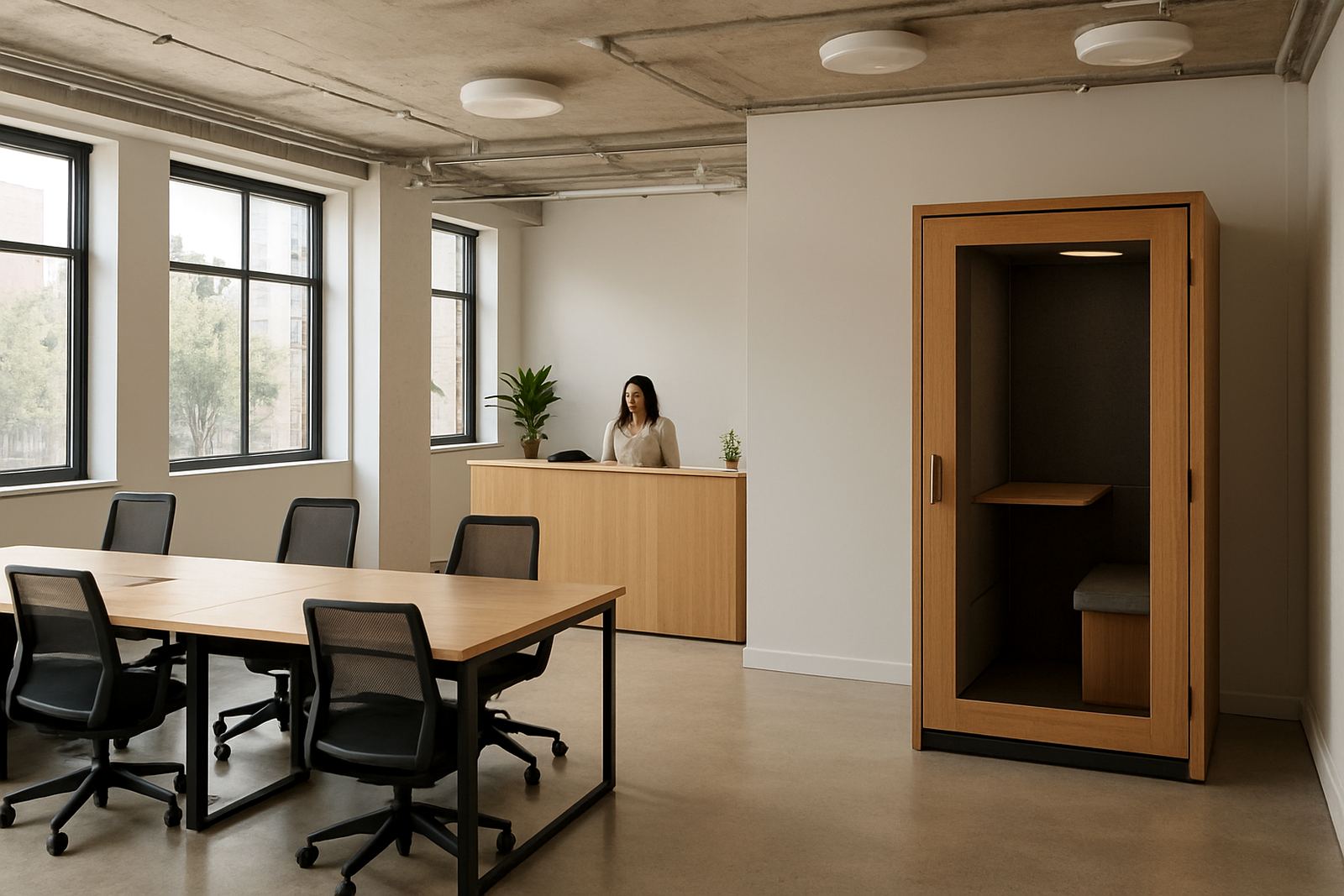
Meeting rooms should be treated as shared business tools, not afterthoughts. Each room should have a reliable data point, stable WiFi coverage and clear call quality for video meetings. In coastal areas like Somerset West, humidity can affect poorly sealed equipment, so we recommend proper cabinet placement and tidy cable management. A small fault in a conference room can spoil the experience for every tenant who books it. It is the kind of problem that looks minor until a client pitch goes wrong.
Layout planning that keeps tenants and guests apart
One of the common mistakes in co-working spaces is trying to run everything on one flat network. That often causes slowdowns, security concerns and support headaches. A better approach is to plan the space in zones: reception, private offices, open-plan areas, meeting rooms, and guest WiFi. Each zone should have coverage and access rules suited to how people use it.
Layout planning should also account for future changes. Hot counters may become private suites, or a tenant may request a dedicated phone line and extra network points. If the cabling and cabinet capacity are not planned properly, those changes become costly. NewTel helps with office relocations and staged rollouts, which is useful when a space opens in phases or takes over another floor. Small planning decisions make a big difference later, especially when load-shedding forces people to work around charging points and backup power.
- Place access points for coverage, not just where cables are easiest to run
- Keep reception and tenant services on separate call rules
- Allow extra cable runs for future suites or expansion
- Plan backup power for routers, switches and core phones
- Label every port so support is faster when tenants move
Common mistakes that drive up support calls
We often see co-working owners underestimating the load on shared internet. A line that works for ten quiet users may struggle when twenty people join calls at once. Another mistake is using consumer-grade gear that cannot manage multiple users, guest traffic and phone calls at the same time. That leads to packet loss, dropped calls and complaints from tenants who expect better.
Another issue is poor voice planning. If reception phones depend on one handset in one spot, a single power failure or equipment fault can stop all calls. Number porting should also be handled early, so the business does not lose its main line during a move or launch. And in areas with municipal noise or building access rules, it helps to schedule cabling work and testing outside peak tenant hours so you do not interrupt clients. A bit of planning saves a lot of backtracking.
Budget ranges for shared office connectivity
Budget depends on size, number of tenants and whether you need voice, guest WiFi and monitoring. For a small co-working space, fibre and basic WiFi may start from around R1,500 to R4,500 per month, depending on line speed and service level. A more active space with multiple access points, VoIP handsets and monitored support can sit between R5,000 and R15,000 per month.
Once you add cabling, cabinet work and phone system setup, once-off installation can range from about R8,000 for a simple room to R40,000 or more for larger premises with several zones. If the building needs extra cable routes, wall points or relocations, the total can climb further. The good news is that these costs are easier to control when the layout is planned before tenants move in. A clear setup also reduces future call-outs and avoids the scramble when a room stops working on a Monday morning.
Support for growing spaces from Cape Town to the provinces
NewTel works with co-working spaces in Cape Town, Century City, Bellville, Somerset West, Paarl and Stellenbosch, and supports offices nationwide. We handle fibre installation, VoIP deployment, WiFi design, network cabling, phone system support, network monitoring, after-hours support and user training. That is useful when your tenants work different hours or when reception needs help after the building has closed.
For growing spaces, the best setup is one that can change without major disruption. Numbers should be easy to move, access points should be easy to add, and support should be close enough to solve issues without long delays. Lungile Mthembu and the NewTel team understand how shared offices operate day to day, from first tenant move-in to the next expansion. If you are planning a new space or upgrading an older one, the right communication setup will make the whole building easier to run.