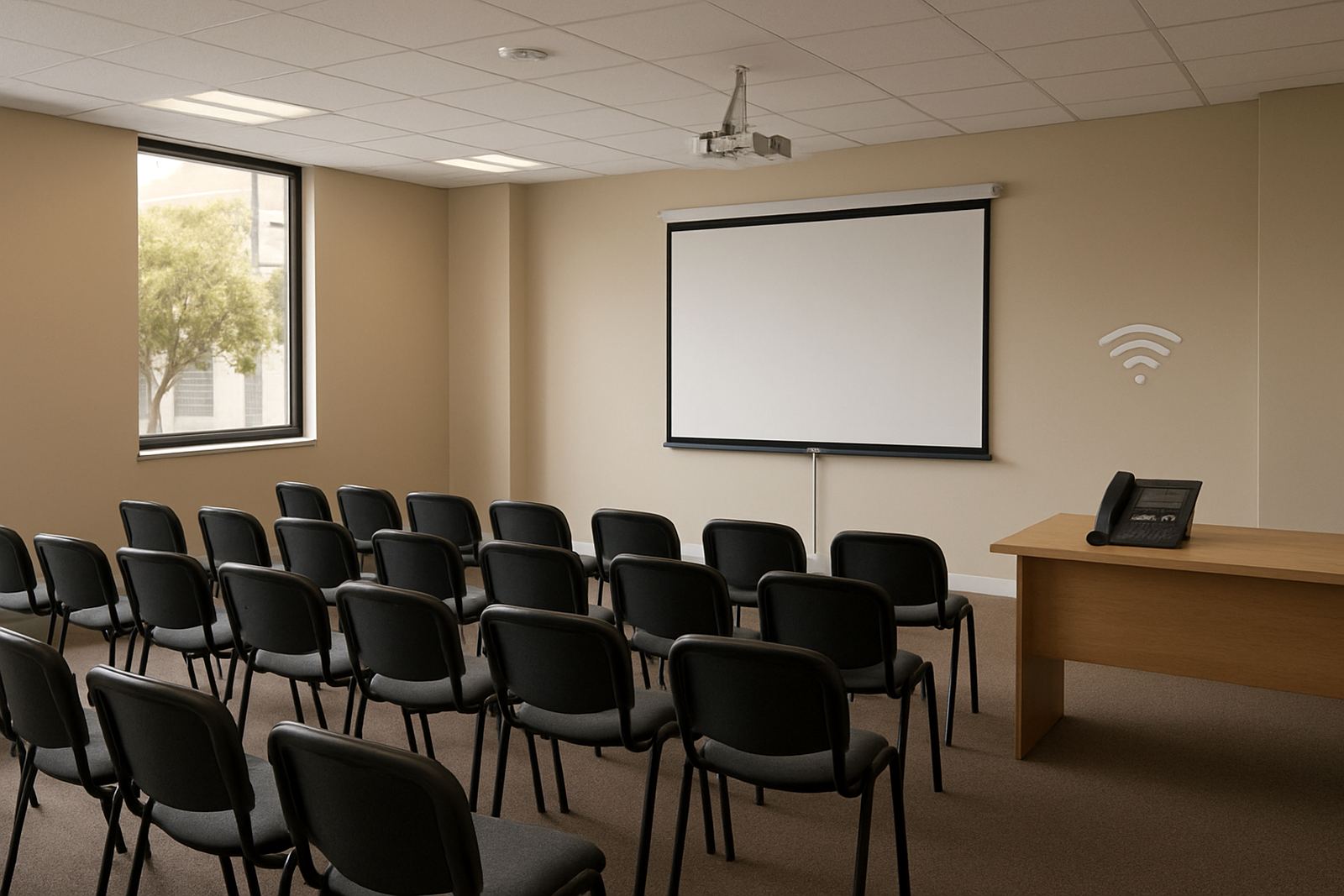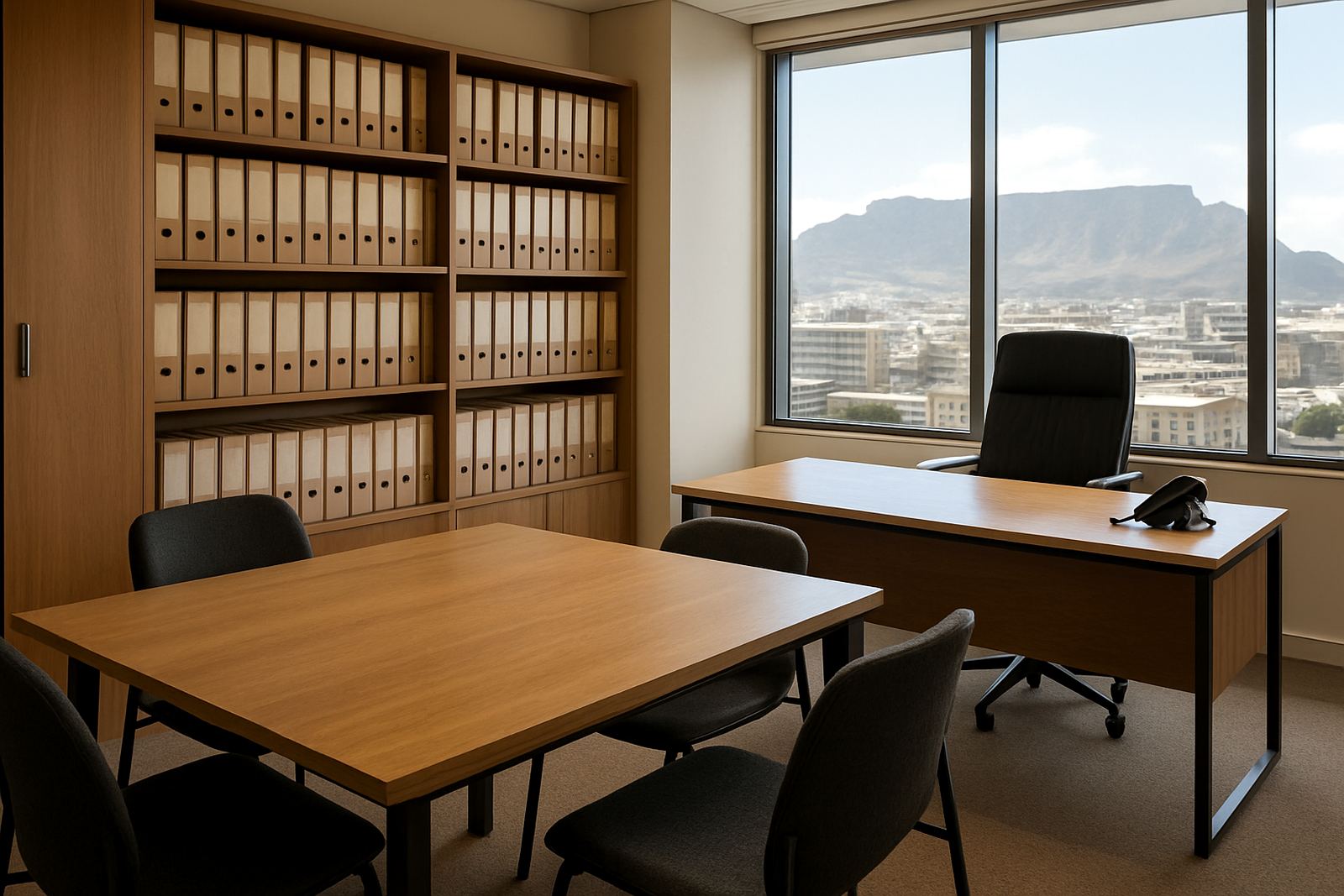


What a retail back office needs day to day
A retail back office is usually a busy admin space behind the shop floor or in a nearby office park. Staff are handling supplier calls, bank confirmations, stock movements, payroll, WhatsApp updates, and quick chats with branch managers. If the line drops during a delivery check or a card terminal goes offline the whole store feels it straight away.
For this kind of setup, the priorities are simple: steady fibre, clear internal calls, enough WiFi coverage for phones and laptops, and a system that still behaves during load shedding. In Cape Town and across smaller towns too, coastal humidity and older shop wiring can cause trouble if the network is not planned properly.
Typical equipment used in a retail back office
The exact kit depends on the store size and how many people are on site, but most retail support spaces need a practical mix rather than anything fancy. We usually plan for a fibre line, a small voice system, managed WiFi, and tidy network cabling so every point is easy to trace later.
- Fibre router and failover-ready internet handoff
- VoIP phones for reception, accounts and store management
- PoE switch for phones, access points and cameras where needed
- Two or three WiFi access points for a medium back office
- Patch panel, labelled cabling and a small wall rack or cupboard
- UPS backup for router, switch and voice equipment
If the store has a warehouse, stock room or separate admin unit, we may split the network into zones so callers, card machines and general staff traffic do not fight for bandwidth.
Planning the layout before the install
Good planning saves money later. Start by mapping where the tills, stock printer, accounts station and manager phone will sit. Then decide where the fibre entry point is, where power is available and where the rack or cupboard can be locked. In many retail sites the best cupboard is not the prettiest one, but it is the one that stays dry, cool and accessible.
We also look at municipal and building rules, especially in shared centres where landlord approval may be needed for cable routes, drilling and any external termination. For outlets in Bellville, Somerset West or Stellenbosch, it helps to confirm these details early because small delays on permissions can stall the whole move.
- Keep the main router and UPS off the floor
- Do not place WiFi gear next to microwaves or heavy metal shelving
- Leave space for extra handsets or a second branch link later
- Label every cable so after-hours support is quicker
Common mistakes in retail support offices
The biggest mistake is treating the back office like a spare room and not a working network hub. Shops often start with one internet line and a couple of phones, then add a printer, CCTV, card terminals and more users without upgrading the cabling or power protection. That is when call quality starts sounding scratchy and staff waste time rebooting gear.
Another common issue is poor WiFi placement. A single access point in the wrong corner can leave the stock room weak while the front office gets too much signal. We also see unprotected equipment during load shedding, which means the phones die before the cards do, not ideal when the branch is still open. A bit of planning avoids alot of these problems.
VoIP and number porting for shopfront teams
Retail back offices often need a central number that routes to the right person quickly. VoIP makes that easier because calls can ring in sequence, divert after hours, or send missed calls to a manager and support team. If the store already has a working number, number porting keeps customer contact details unchanged while the service moves onto a better system.
For multi-branch retailers, internal calling also saves time. A branch in Paarl can reach head office, procurement or another store without using cell airtime, and call handling can be adjusted when the shop is busy, short staffed or closed for stock take.
- Auto-attendant for simple call routing
- After-hours voicemail or emergency diversion
- Call groups for accounts, admin and store management
- Usage reports to track peak calling times
Budget ranges for small and medium retail offices
Budgets depend on the number of users, cable runs, existing infrastructure and whether the site needs a fresh fibre install or only an upgrade. For a small retail back office with basic fibre and VoIP, many clients spend between R8 000 and R18 000 for the initial setup, excluding monthly service charges. A larger branch with more points, better WiFi coverage and UPS backup can sit closer to R22 000 to R45 000.
Monthly costs usually include fibre access, voice usage and support. A compact branch might budget from around R1 500 to R4 500 per month depending on line speed, number of extensions and the support level. If you are running several shops, centralised monitoring can reduce call losses and cut repeat site visits, which matters when branches are spread across Cape Town and other areas nationwide.
Support that suits retail hours
Retail work does not stop neatly at 5 pm, and support calls often come in before opening or after stock delivery. NewTel offers after-hours support, user training and network monitoring so the branch team is not left guessing when a handset goes quiet or a line needs checking. We also help with office relocations, which is useful when a store moves within a centre or shifts into a new unit.
For branches in Century City, Bellville, Somerset West, Stellenbosch and the wider Cape Town area, local site work is planned around trading hours to keep disruption low. Nationwide, we set up the fibre and voice side in a way that gives admin teams the same calling experience whether they are in a flagship store or a smaller back office.