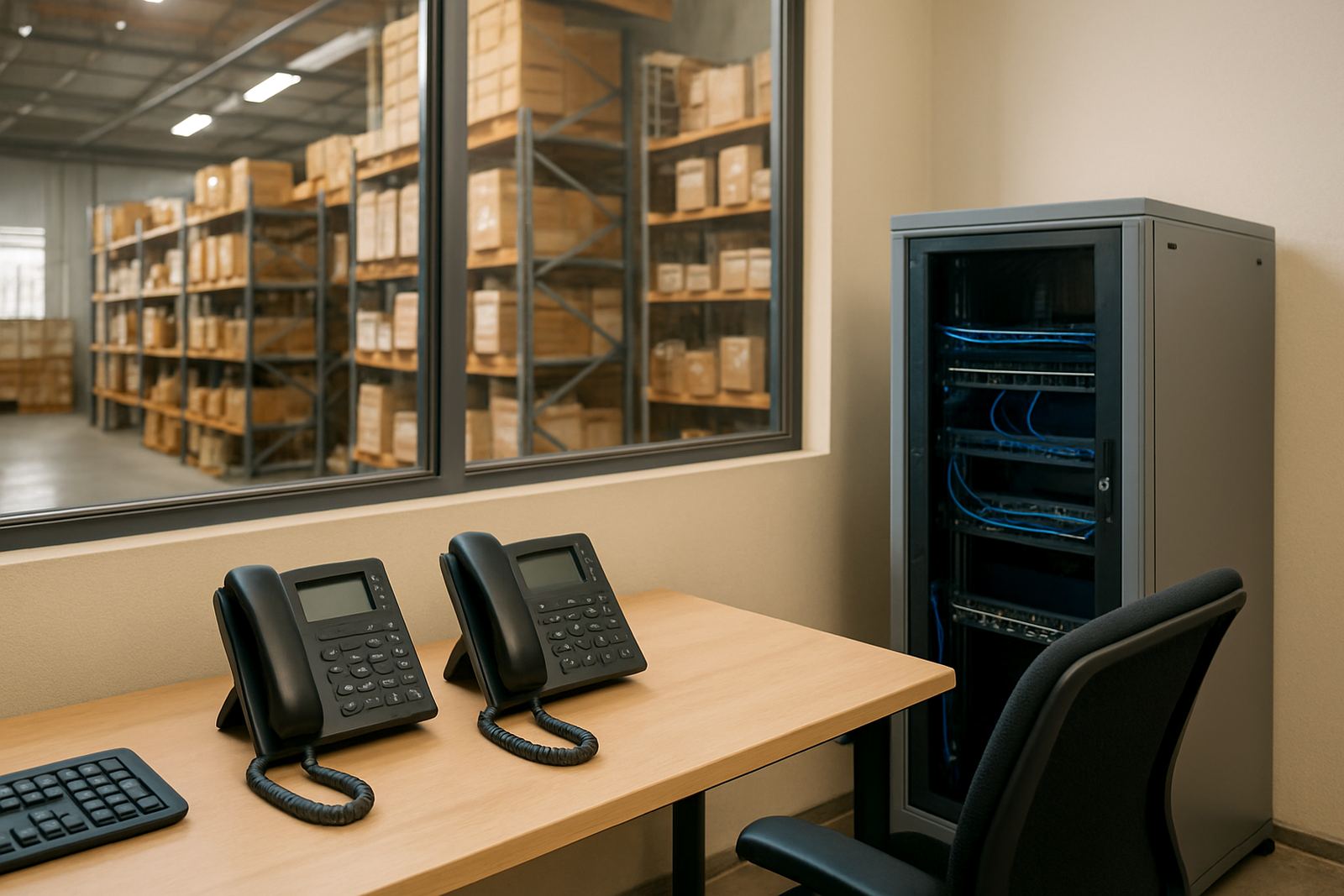


Kraaifontein team with one number for many workstations
The client was a professional services business based in Kraaifontein, with staff splitting their time between a home office, client visits and a small shared workspace near Cape Town’s northern suburbs. They wanted a practical calling setup that would make everyone reachable on the same business line, without relying on personal mobile numbers or clunky manual forwarding.
The brief was straightforward but time-sensitive. They needed a central number, clear extension mapping, voicemail that did not get lost, and a way to route calls when somebody was on the road or working after hours. They also wanted the system to stay dependable during load-shedding and when fibre performance dipped in the late afternoon, which is common in busy residential and mixed-use areas around Kraaifontein.
We planned the build around the way the team actually worked, not around a generic office layout. That meant each person could be reached through a named extension, while the main reception line stayed in one place and followed rules set by the business, not by whoever answered first that day.
What had to work in a homebase setup
Because the business did not have a large head office, the solution had to be simple to manage and easy to explain to part-time staff. The client also needed a setup that could grow without replacing the whole system six months later. We kept the design tight, with enough capacity for current use and a little headroom for new users, a second line and another handset if needed.
- One main business number with central call handling
- Extensions for 6 users across different locations
- Call forwarding based on working hours and availability
- Voicemail routed to send us a message
- Fibre connectivity suitable for steady voice quality
- After-hours handling for emergencies and missed calls
The other constraint was admin time. No one on the client side had hours to spend on settings or manual call routing. So we made sure the day-to-day process was simple: answer, forward, transfer, or send to voicemail, with the same rules used every day. That cut down on missed calls and confusion, especially when more than one person was away from the office.
Fibre and VoIP build done in two weeks
We completed the project over a two-week period, starting with an on-site review in Kraaifontein and then moving through the fibre and voice setup in stages. First we checked the available connectivity, the internal cabling points and the best place for the main handset and network equipment. After that we configured the extension plan, tested the call flows and trained the team on how to transfer calls properly.
The call rules were set so incoming calls could ring the main line first, then move through to the right person or to a backup extension if the first person did not answer. The homebase model worked well because it let the business keep one professional front end while still giving staff the freedom to work away from a fixed office. We also set up voicemail-to-message, so missed messages landed in a shared inbox and were dealt with quickly.
For the fibre side, we made sure the connection was suitable for voice traffic and everyday office use at the same time. That mattered because the team was not just making calls, they were also handling message, cloud files and remote logins, all from a small site with limited space and occasional power interruptions.
Call forwarding rules and central extensions
The core of the project was the extension structure. We mapped each user to a direct extension and linked those extensions to practical forwarding rules based on time of day and role. The managing contact could take priority calls, while support staff could be reached through a shared ring group when needed. We also added simple failover so if one handset was unavailable, the call moved on instead of dropping or sitting unanswered.
- Central reception line with extension-based routing
- Ring groups for shared answering during busy periods
- Forwarding to mobile when staff were off-site
- Voicemail capture for missed after-hours calls
- Call handling rules set for business hours and weekends
This kept the operation tidy. No more passing around private cell numbers or asking clients to phone back later because the right person was out. It also reduced repeated call-backs, which is a real issue for small teams serving customers across Cape Town and further afield. One slight hiccup we planned for was staff changing locations during the day, so the forwarding rules had to be flexible enough to follow them without constant manual changes.
Training, support and the first busy week
Once everything was tested, we trained the team on day-to-day use. That included transferring calls, checking voicemail, using extension dialling, and updating forwarding when someone was away from their usual spot. We kept the training practical and short, because the client needed to keep working while the system went live.
During the first busy week, we monitored the call behaviour closely. That gave us a chance to fine-tune the answer sequence and tighten one or two forwarding rules so the main line reached the right person faster. We also checked audio quality during peak usage and after a brief power cut, which helped confirm that the fibre and voice setup was behaving as expected.
Support remained available after go-live, and the client made use of it to confirm a few user preferences. That kind of early support is important for smaller offices because it helps everyone settle in without losing half a morning to admin. By the end of the week, the team was comfortable with the system and handling calls with less back-and-forth.
What changed for the business after go-live
The result was a cleaner, more professional calling setup for a distributed team. Calls were answered faster, messages were easier to track, and staff could work from different locations without the business sounding split in three. For a small operation, that makes a direct difference to client confidence and staff efficiency.
The client also gained a better sense of control. Instead of phones being left to chance, the business now had a defined structure for who answers what, when calls roll over, and how missed calls are handled. In practical terms, that meant fewer dropped opportunities and less time spent chasing people for basic information.
For another Kraaifontein homebase setup, we would still begin with how the team moves through the day.: start with how the team actually moves through the day, then build the fibre and VoIP rules around that. That method works well for small offices in Kraaifontein, Bellville, Brackenfell and the wider northern suburbs because it keeps the set-up lean, dependable and easy to manage.
Key facts
| Client type | Small professional services office in Kraaifontein |
|---|---|
| Project duration | 2 weeks |
| Users connected | 6 extensions |
| Core services | Fibre installation, VoIP deployment, number porting, WiFi design |
| Call handling | Central line, ring groups, forwarding rules, voicemail-to-message |
| Support | User training and after-hours support with live monitoring |