

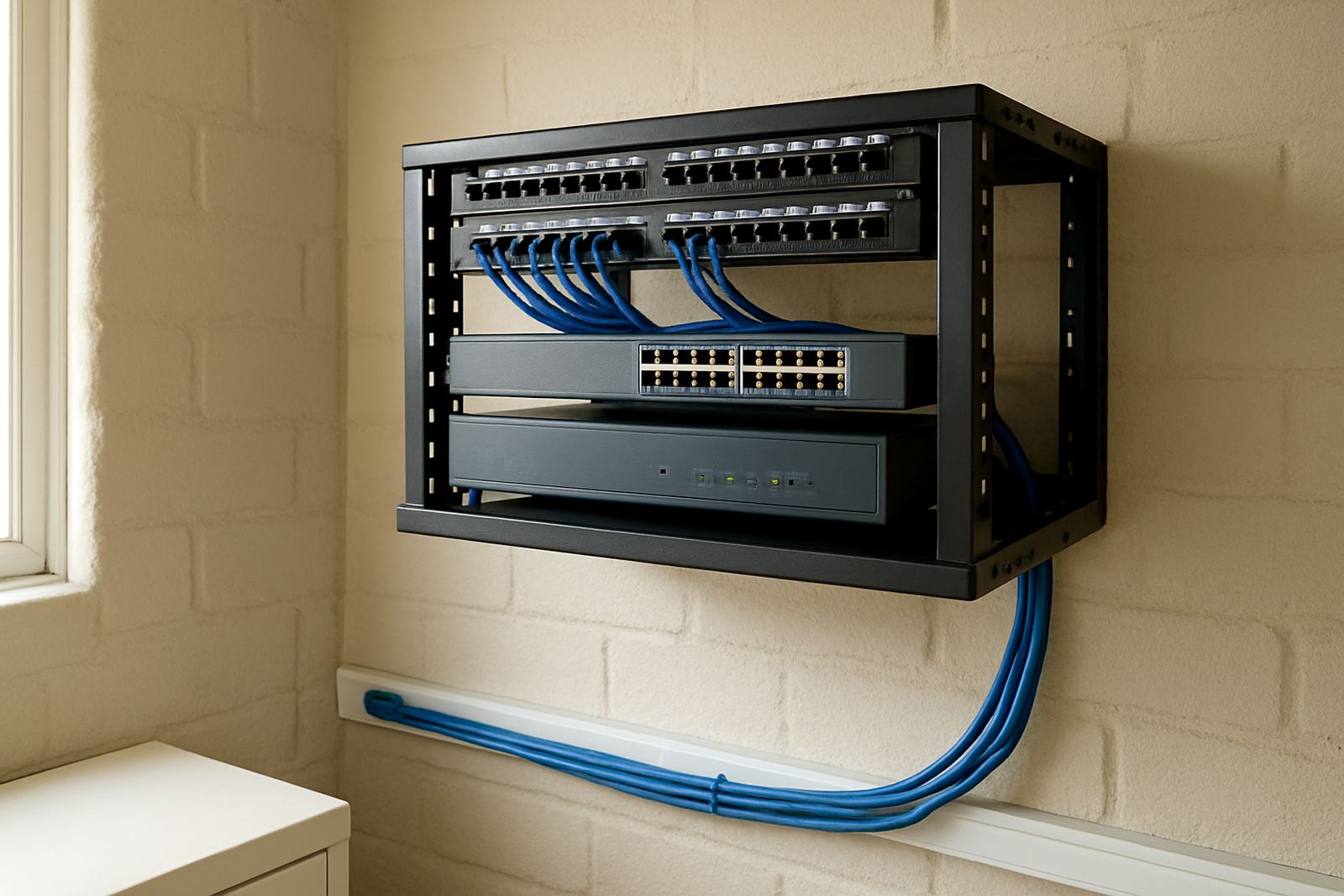
Start With A Cabinet That Fits The Office Load
A small office cabinet should be sized for today and the next 12 to 24 months, not only for the first fibre install. In most Cape Town and nearby office spaces, that means allowing room for the router, switch, voice gateway, patch panels, power backup, and a little spare space for future lines. If the cabinet is too tight, airflow suffers and every service call takes longer than it should.
For a business with 6 to 20 staff, a wall-mounted or compact floor cabinet often works well if the equipment count stays modest. Once you add multiple handsets, extra network points, CCTV feeds, or a second internet handover, a larger cabinet becomes worth the extra Rand. The aim is simple: enough space for tidy cable runs, clear labelling, and safe access when there is a fibre fault or a PoE switch needs attention.
- Leave space above and below active devices for airflow
- Allow spare rack units for growth
- Keep the door easy to open without blocking corridors
- Plan for a lock, especially in shared office areas
The Core Items Every Cabinet Should Hold
A proper office cabinet should do more than hold boxes of equipment. It should bring the main communication points together in one place so that staff, support teams and contractors can work on the system without hunting through different rooms. That matters in offices across Century City, Bellville and Stellenbosch where space is often limited and the cleaner the setup the easier it is to maintain.
The usual core items are straightforward. Fibre termination should be secure and protected from bending or accidental knocks. A router should sit close to the handoff point. A managed switch should be mounted with enough slack in the patch cords. A patch panel should be used for fixed data runs, not loose cables going directly into the switch. If VoIP is in use, the voice gateway or hosted phone equipment must also be accessible. It sounds basic, but a cabinet that is organised this way saves real time when a line drops or a handset stops registering.
- Fibre termination and spare slack neatly coiled
- Router and firewall placed for easy access
- Managed switch with labelled patch leads
- Patch panel for structured cabling
- Voice equipment for VoIP calls and extensions
Power, Cooling And Backup Are Not Optional Extras
In South Africa, power planning is part of the job. A communications cabinet that depends on a single wall socket will struggle the moment load-shedding starts or a breaker trips. The cabinet should have a proper power path with surge protection and, where needed, a small UPS for the router, switch and voice gear. That gives the office time to keep calls going, save work and shut down safely if the outage lasts.
Cooling is just as important. A hot cupboard packed with active equipment can cause random faults that look like line problems but are really heat problems. If the cabinet sits in a sunny corner or a room that gets warm in summer, use ventilation and avoid stacking devices directly on top of each other. Coastal humidity near Cape Town can also affect metal fittings and poorly protected terminations, so a dry, enclosed cabinet is better than an open shelf. It is a small point, but it matters more than people think.
For offices that cannot afford call interruptions, the cabinet should also make it easy to isolate a faulty device without taking the whole network down. That means labelled power, a visible UPS status, and enough space to swap gear quickly if needed.
- Surge protection on the main feed
- UPS sized for the router, switch and VoIP equipment
- Ventilation or active cooling in warmer rooms
- Raised or enclosed position away from moisture
Label Everything So Faults Do Not Become Guesswork
Good labelling is one of the cheapest ways to reduce downtime. Every cable leaving the cabinet should be marked at both ends, and the patch panel should match the room numbers or workstation numbers used in the office. If a user in Paarl says a phone port is dead, support should be able to trace it quickly without testing every cable in the row.
Clear records help during office relocations too. NewTel often sees small businesses moving within Cape Town, where the cabinet is left in a hurry and the next team inherits an untidy bundle of unlabeled leads. A simple port list and a note of which line feeds which handset or workstation prevents long delays after the move. It also makes it easier to port numbers, extend WiFi, or add more users without disturbing the full setup.
Use printed labels, not handwritten tape that peels off after a year. Keep a short cabinet list inside the door showing the main devices, power sources, and contact details for the support team. That one sheet can save a lot of confusion during after-hours faults.
Why A Cabinet Affects Voice Quality And Internet Stability
People often treat the cabinet as a storage point, but it directly affects call quality and data stability. VoIP depends on stable network performance, and fibre access works best when the physical layout is clean. Poor patching, crushed cables, loose plugs, and tangled leads can create intermittent faults that show up as dropped calls, jitter, slow file transfers or random disconnects.
A tidy cabinet also helps when there is a mix of services in one office. For example, one small law firm in Century City may run hosted handsets for reception, a few wired workstations, and guest WiFi for visitors. If the switch ports are mapped properly, the team can prioritise voice traffic, separate guest access, and keep the office running even if one segment needs work. That kind of order is practical, not fancy, and it reduces avoidable support calls.
Think of the cabinet as the office's control point. If it is organised, the whole network behaves better. If it is crowded and unclear, every fault takes longer to trace and every change becomes risky.
A Simple Local Example From Century City
In a Century City office with 12 staff, the communication cabinet might hold a fibre termination unit, a router, a 24 port switch, a patch panel, a UPS and a voice device for VoIP handsets. That setup is enough for daily work, but only if the cabinet is mounted in a cool spot, the cables are dressed neatly, and the power is protected. Add one or two spare patch leads and a little empty space, and the office can grow without a full rework.
For a business that expects to relocate or expand into Bellville or Somerset West, planning ahead matters even more. A cabinet that starts clean is easier to move, easier to re-terminate, and easier to hand over to a new technician. It also supports user training, because staff can be shown where the main devices are and who to call when a phone or internet line acts up. No one wants to dig through a mess of wires at 8am when clients are already waiting.
NewTel works with small offices across Cape Town and nationwide to keep fibre, VoIP, cabling and network monitoring aligned with the way real offices operate. The cabinet is where that order begins.